PERSONAGGI CELEBRI LAZZARITI LOUIS ÉDOUARD BOUËT-WILLAUMEZ
PERSONAGGI CELEBRI LAZZARITI LOUIS ÉDOUARD BOUËT-WILLAUMEZ
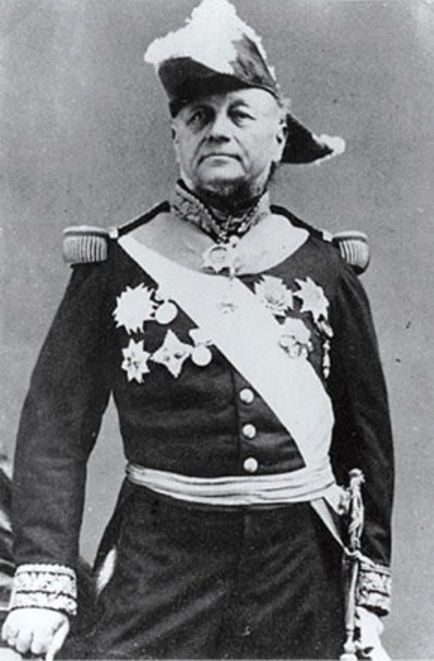
Louis Édouard Bouët-Willaumez (24 aprile 1808 – 9 settembre 1871) è stato un ammiraglio francese.
Dopo essersi unito alla Marina francese nel 1824 intraprese un viaggio di cinque anni, prima nel Mediterraneo (dove vide l'azione nella battaglia di Navarino nel 1827) e poi nell'Oceano Indiano.
Nel 1829 fu promosso a insegna della nave e prestò servizio nella spedizione Morea. Nel 1830 fette parte del blocco e della cattura di Algeri, seguito dal blocco di Anversa. Fatto tenente nel 1834, fu assegnato al posto navale di La Plata, da dove fu mandato in Senegal. Nel 1836 prese il comando del piroscafo L'Africain, con la quale viaggiò per 200 miglia nell'entroterra, fino alle cascate di Félou (les Chutes de Félou) nell'alto Senegal. Era l'unico occidentale a tornare vivo, gli altri avevano ceduto alla malattia.
Nel 1848 divenne comandante della divisione navale della costa africana, sulla fregata Pénélope (una fregata di 3° grado che trasportava cannoni da 30 libbre, fu deposta nel 1830 e varata nel 1840 e colpita dalle liste nel 1864). Durante questo periodo ripristinò la sovranità francese sulla Guinea e fu nominato Comandante della Legion d'onore per il coraggio dimostrato durante una carica di baionette sulla terra contro le tribù ribelli. Ha anche preso parte a una missione diplomatica per negoziare la fine del commercio con l'Inghilterra.
Nel 1853, promosso a contrammiraglio, fu nominato capo di stato maggiore dello squadrone del Mediterraneo, sotto l'ammiraglio Hamelin e fu ammesso nell’Ordine di San Lazzaro di Gerusalemme con il grado di Grande Ufficiale. Durante la guerra di Crimea prese parte al bombardamento di Odessa e agli attacchi a Sebastopoli.
Comandò la flotta francese del Mediterraneo nel 1864 e fu nominato al Senato di Francia nel 1865.
FAMOUS LAZZARITES LOUIS ÉDOUARD BOUËT-WILLAUMEZ
Louis Édouard Bouët-Willaumez (24 April 1808 – 9 September 1871) was a French admiral.
After joining the French Navy in 1824 he undertook a five-year voyage, first to the Mediterranean (where he saw action at the Battle of Navarino in 1827) and then to the Indian Ocean.
In 1829 he was promoted to ship's ensign and served on the Morea expedition. In 1830 part of the blockade and capture of Algiers was followed by the blockade of Antwerp. Made lieutenant in 1834, he was assigned to the naval post of La Plata, from where he was sent to Senegal. In 1836 he took command of the steamer L'Africain, with which he traveled 200 miles inland, to the Félou Falls (les Chutes de Félou) in upper Senegal. He was the only Westerner to return alive, the others had succumbed to the disease.
In 1848 he became commander of the African Coast Naval Division, on the frigate Pénélope (a 3rd rate frigate carrying 30-pounder guns, was laid down in 1830 and launched in 1840 and hit the lists in 1864). During this period he restored French sovereignty over Guinea and was named Commander of the Legion of Honor for his courage during a land bayonet charge against rebellious tribes. He also took part in a diplomatic mission to negotiate an end to trade with England.
In 1853, promoted to rear admiral, he was appointed chief of staff of the Mediterranean squadron, under Admiral Hamelin and was admitted to the Order of Saint Lazarus of Jerusalem with the rank of Grand Officer. During the Crimean War he took part in the bombing of Odessa and attacks on Sevastopol.
He commanded the French Mediterranean fleet in 1864 and was appointed to the Senate of France in 1865.
Iscriviti alla nostra Newsletter
News Ordine di San Lazzaro di Gerusalemme – Gran Baliato di Sicilia