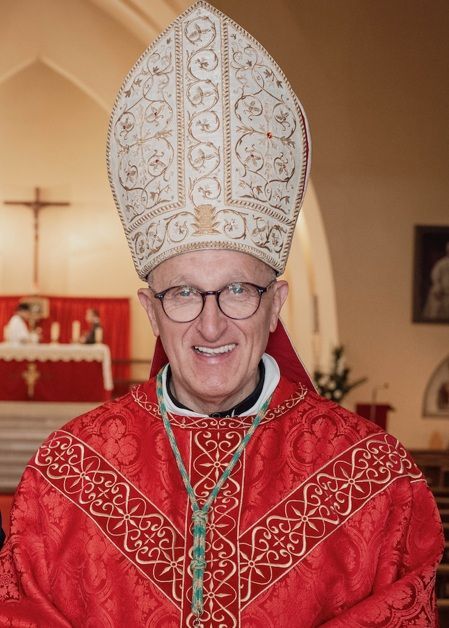
MEDITAZIONE PER LA DOMENICA DELLE PALME DEL MOLTO REV.DO DAVID HAMID, ECLJ, VESCOVO DELLA CHIESA D’INGHILTERRA CAPPELLANO DEL GRAN BALIATO DI SICILIA
MEDITAZIONE PER LA DOMENICA DELLE PALME DEL MOLTO REV.DO DAVID HAMID, ECLJ, VESCOVO DELLA CHIESA D’INGHILTERRA CAPPELLANO DEL GRAN BALIATO DI SICILIA
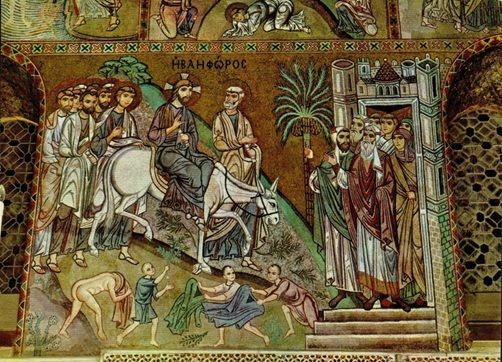
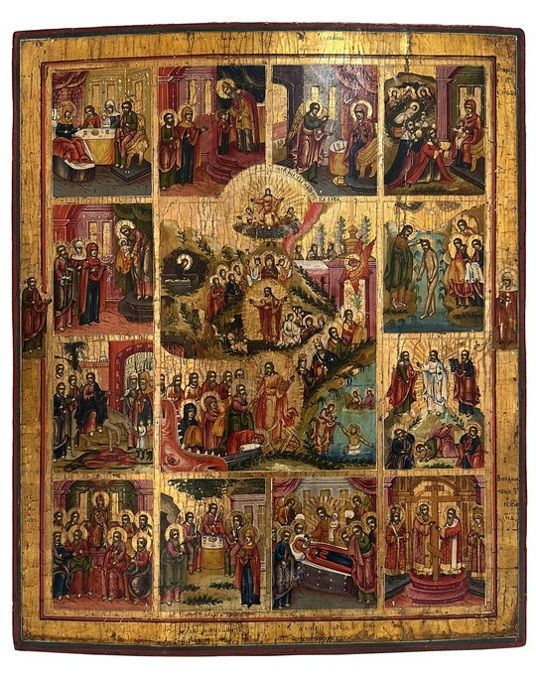
(Ingresso di Gesù a Gerusalemme, Palazzo Reale, Cappella Palatina, Palermo, sec. XII)
Carissimi Confratelli e Consorelle dell’Ordine Militare ed Ospedaliero di San Lazzaro di Gerusalemme,
La Domenica delle Palme è un momento vivido nell'anno liturgico cristiano. Ci uniamo alla folla, agitando rami e accogliendo Gesù al suo ingresso a Gerusalemme. Sembra una celebrazione regale. Eppure il Vangelo ci offre un'immagine sorprendente: Gesù non cavalca un cavallo maestoso e imponente, ma un piccolo puledro. Non è certo ciò che ci aspetteremmo da un re.
Questo dettaglio è importante. Ci mostra che tipo di re è Gesù. Non viene con potere o con una dimostrazione di forza. Viene con umiltà e pace. Il profeta Zaccaria aveva già parlato di un re simile, uno che sarebbe venuto con dolcezza e mansuetudine, non tanto come un conquistatore, quanto come un servo: "Ecco, il tuo re viene a te... umile e cavalca un asino, un puledro, il figlio di un'asina" (Zaccaria 9,9).
Due grandi studiosi del Nuovo Testamento negli Stati Uniti, Dominic Crossan e Marcus Borg, hanno scritto un libro intitolato "L'ultima settimana". In quel volume, si narra di qualcosa che non è riportato nei nostri Vangeli: nello stesso momento in cui Gesù entrava da Betania, a oriente, un'altra processione stava entrando a Gerusalemme. Era Ponzio Pilato, che arrivava da occidente, con soldati romani, armi e forza. Il suo arrivo aveva lo scopo di dimostrare potere e controllo. Le autorità lo ritenevano necessario, poiché durante la Pasqua migliaia di ebrei affluivano a Gerusalemme, e i Romani dovevano mostrare la loro potenza per chiarire a tutti i pellegrini di essere un popolo dominato e conquistato.
Quindi Crossan e Borg affermano che ci furono due processioni. Esse potevano rappresentare due modi di vivere. Uno era fondato sulla forza, la paura e il dominio. L'altro era fondato sulla pace, la compassione, l'umiltà e la fiducia in Dio.
Le persone che fiancheggiavano le strade con rami di palma per accogliere Gesù erano a conoscenza di entrambe le processioni. Gridavano "Osanna" – "salvaci" – perché anelavano alla libertà. Ma Gesù venne a salvare loro e noi in un modo diverso. Non attraverso la conquista e la forza militare, ma attraverso l'amore. Non attraverso il potere, ma attraverso il dono di sé che vediamo sulla croce.
Questa è la domanda che la Domenica delle Palme pone a ciascuno di noi: a quale processione ci uniremo?
La via di Gesù non è la via del mondo. Non cerca gloria, dominio o controllo. Inizia con l'umiltà. Cammina con i poveri. Perdona i nemici. Conduce, infine, alla croce, dove l'amore viene donato completamente.
Nella Domenica delle Palme, ci uniamo a una processione liturgica, agitando palme, per mostrare che quando seguiamo Gesù scegliamo questa via. Scegliamo la pace al posto del potere, la compassione al posto del giudizio, l'amore al posto della paura.
E così, mentre iniziamo la Settimana Santa, camminiamo di nuovo con lui, sulla via del re umile.
+ David Hamid, ECLJ
MEDITATION FOR PALM SUNDAY BY THE RIGHT REVEREND DAVID HAMID, ECLJ, BISHOP OF CHURCH OF ENGLAND CHAPLAIN OF THE GRAND BAILIWICK OF SICILY
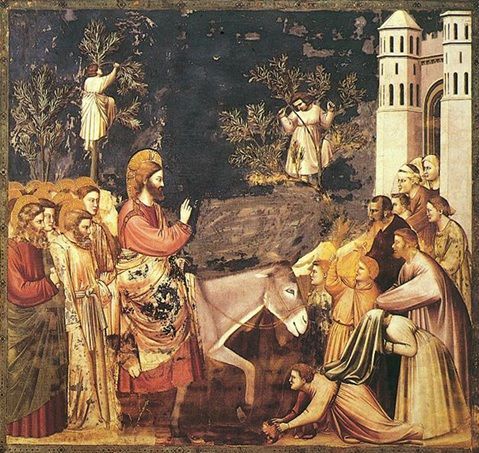
(Giotto di Bondone, Entrance to Jerusalem, Scrovegni Chapel in Padua, sec. XIV)
Dear Confreres and Sisters of the Military and Hospitaller Order of St Lazarus of Jerusalem,
Palm Sunday is a vivid moment in the Christian year. We join the crowd, waving branches and welcoming Jesus as he enters Jerusalem. It feels like a royal celebration. Yet the Gospel gives us a surprising image: Jesus does not ride a great and magnificent horse, but a small colt. This is not what we expect of a king.
This detail is important. It shows us the kind of king that Jesus is. He does not come with power or a display of force. He comes in humility and peace. The prophet Zechariah had already spoken of such a king, one who would come gently and meekly, not so much a conqueror, but as a servant: “Lo, your king comes to you … humble and riding on a donkey, on a colt, the foal of a donkey” (Zechariah 9.9).
Two great New Testament scholars in the USA, Dominic Crossan and Marcus Borg, wrote a book called The Last Week. In that volume, they tell of something that is not recorded in our Gospels: At that same time as the entry of Jesus from Bethany in the east, another procession was entering Jerusalem. It was Pontius Pilate who came from the west, with Roman soldiers, weapons, and strength. His arrival was meant to show power and control. It was deemed necessary by the authorities, for at Passover, thousands of Jews flocked to Jerusalem, and the Romans had to display their power to make clear to all the pilgrims that they were a dominated and conquered people.
So Crossan and Borg say there were two processions. They could represent two ways of living. One was built on force, fear, and domination. The other was built on peace, compassion, humility and trust in God.
The people who lined the streets with palm branches to welcome Jesus would have known about both processions. They cried “Hosanna”—“save us” because they longed for freedom. But Jesus came to save them and us in a different way. Not through conquering and military strength, but through love. Not through power, but through self-giving which we see on the cross.
This is the question Palm Sunday asks each of us: which procession will we join?
The way of Jesus is not the way of the world. It does not seek glory or domination or control. It begins with humility. It walks with the poor. It forgives enemies. It leads, finally, to the cross—where love is given completely.
On Palm Sunday, we join in a liturgical procession, waving palms, to show that when we follow Jesus we choose this way. We choose peace over power, compassion over judgment, love over fear.
And so, as we begin Holy Week, we walk again with him—on the path of the humble king.
+ David Hamid, ECLJ
Iscriviti alla nostra Newsletter
News Ordine di San Lazzaro di Gerusalemme – Gran Baliato di Sicilia