MEDITAZIONE PER LA DOMENICA LAETARE DEL MOLTO REVERENDO DOM VITTORIO RIZZONE, ECLJ, ABATE DI SAN MARTINO DELLE SCALE CAPPELLANO DEL GRAN BALIATO DI SICILIA
MEDITAZIONE PER LA DOMENICA LAETARE DEL MOLTO REVERENDO DOM VITTORIO RIZZONE, ECLJ, ABATE DI SAN MARTINO DELLE SCALE CAPPELLANO DEL GRAN BALIATO DI SICILIA
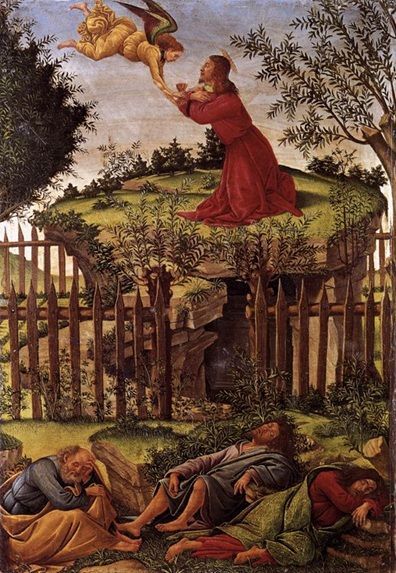
(Orazione nell’orto, di Sandro Botticelli, 1490-1493, Museo de los Reyes Católicos, Granada)
“Rallegrati, Gerusalemme, e voi tutti che l’amate radunatevi”
Carissimi Confratelli e Consorelle dell’Ordine di San Lazzaro di Gerusalemme.
L’antifona d’ingresso che introduce la liturgia della IV domenica di Quaresima è tratta da un passo del profeta Isaia (66, 10-11), in cui il Signore invita alla letizia: “Rallegrati, Gerusalemme, e voi tutti che l’amate radunatevi. Sfavillate di gioia con essa, voi che eravate nel lutto. Così gioirete e vi sazierete al seno delle sue consolazioni”. Si tratta della “gioia di desiderio soprannaturale con la quale durante la Quaresima della vita si attende la santa Pasqua”, per dirla con San Benedetto (Regola 49, 7), e che permette di vedere sotto un’ottica differente l’austerità del cammino quaresimale, dal momento che essa si deve vivere nella gioia dello Spirito Santo (RB 49, 6). La gioia dell’approssimarsi della Pasqua, già preannunciata nella seconda domenica di Quaresima dalla contemplazione dell’evento della Trasfigurazione di Gesù, viene espressa anche attraverso l’adozione di paramenti liturgici diversi, di colore rosa, che è un’attenuazione del severo colore viola tipico della Quaresima e del lutto. Un invito a gioire, pertanto, premonitore di quella indicibile esultanza che verrà dopo il lutto la sofferenza, come ripeterà nel Getsemani Gesù ai discepoli sgomenti per aver appreso che non avrebbero visto: “In verità, in verità vi dico: voi piangerete e vi rattristerete, ma il mondo si rallegrerà. Voi sarete afflitti, ma la vostra afflizione si cambierà in gioia” (Gv 16, 20).
Se, però, si legge il contesto isaiano in cui si pone l’invito alla gioia esso si dischiude per un’altra prospettiva: è quella dell’adunanza. Sebbene il testo ebraico ribadisca l’invito a gioire (“rallegratevi con Gerusalemme, esultate per essa quanti l’amate”), quello greco dei LXX e il testo latino che ne dipende, invitano all’adunanza (“Rallegratevi con Gerusalemme, “adunatevi in assemblea”, “conventum facite”, riunitevi”, in essa quanti l’amate”). Si tratta del riunirsi di coloro che amano Gerusalemme, che hanno partecipato al suo lutto, e che per ciò stesso parteciperanno alla sua consolazione, e si sazieranno come lattanti al seno della sua gloria. Dietro l’immagine di Gerusalemme, c’è, però, Dio, che come una madre consolerà i suoi figli, allattandoli, abbracciandoli e accarezzandoli in Gerusalemme (Is 66, 12-13). E in Gerusalemme si raduneranno non solo Israele ma anche tutte le nazioni (Is 66,18: “Io vengo a radunare le genti di tutte le lingue”), che da un canto salvaguarda il particolarismo di elezione e chiamata di Gerusalemme e del popolo ebraico, ma d’altro canto si apre in una prospettiva universalistica, in cui anche le nazioni pagane (cfr. Mal 1,11), tra le quali il Signore si trarrà sacerdoti e leviti, i quali faranno offerte al tempio di Gerusalemme, e tra queste offerte ci sarà anche quella di ricondurre in oblazione gradita a Dio i figli di Israele (Is 66, 20-21; cfr. Rom 11, 25-26).
Si tratta, in definitiva, di una novità radicale (Is 66, 22: “cieli nuovi e terra nuova che io sto per fare dureranno davanti a me”): tutti i popoli si incontreranno nel nome del Signore unico Dio e a lui solo si renderà culto. L’adunanza gioiosa prospettata è profondamente diversa da quella di Babele, fatta dagli uomini per salire al cielo e farsi un nome (Gen 11, 4), cioè per scalzare Dio dalla propria sede e sostituirsi a Lui. Si tratta di quell’adunanza che sappiamo che si realizza a partire dall’innalzamento di Gesù sulla croce, luogo, che, nella prospettiva giovannea non è solo di passione e morte, ma anche di glorificazione, luogo dal quale Gesù ascende al Padre e da dove dona lo Spirito Santo: “Io quando, sarò elevato da terra, attirerò tutti a me” (Gv 12, 32). Per altra via, pertanto, la liturgia di questa domenica ci riconduce alla prospettiva pasquale nella gioia della condivisione della fede in un unico Dio, padre e madre di tutti.
+ Dom Vittorio Rizzone, OSB, ECLJ,
Abate di San Martino delle Scale
MEDITATION FOR LAETARE SUNDAY BY THE VERY REVEREND DOM VITTORIO RIZZONE, ECLJ, ABBOT OF SAN MARTINO DELLE SCALE CHAPLAIN OF THE GRAND BAILIWICK OF SICILY
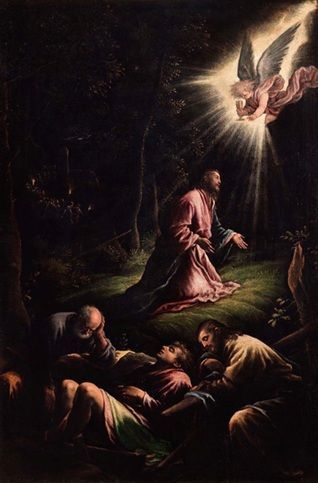
(Prayer in the Garden, Francesco Dal Ponte the Younger, 1590, Bassano del Grappa Civic Museum)
"Rejoice, Jerusalem, and gather together, all you who love her."
Dear Brothers and Sisters of the Order of Saint Lazarus of Jerusalem,
The entrance antiphon that introduces the liturgy of the Fourth Sunday of Lent is taken from a passage from the prophet Isaiah (66, 10-11), in which the Lord invites us to rejoice: “Rejoice, Jerusalem, and all who love her, gather together. Rejoice with her, all you who mourn. You will rejoice and be satisfied at her consolations." This is the ‘joy of supernatural desire with which, during the Lent of life, we await Holy Easter,’ in the words of St. Benedict (Rule 49, 7), and which allows us to see the austerity of the Lenten journey from a different perspective, since it must be lived in the joy of the Holy Spirit (RB 49, 6). The joy of the approaching Easter, already heralded on the second Sunday of Lent by the contemplation of the event of Jesus' Transfiguration, is also expressed through the adoption of different liturgical vestments, in pink, which is a softening of the severe purple colour typical of Lent and mourning. It is therefore an invitation to rejoice, a foreshadowing of the unspeakable exultation that will come after mourning and suffering, as Jesus will repeat in Gethsemane to his disciples, who are dismayed to learn that they will not see: 'Truly, truly, I say to you, you will weep and mourn, but the world will rejoice. You will be sorrowful, but your sorrow will turn into joy' (Jn 16, 20).
However, if we read the Isaiah context in which the invitation to joy is placed, it opens up to another perspective: that of the gathering. Although the Hebrew text reiterates the invitation to rejoice (“rejoice with Jerusalem, be glad for her, all you who love her”), the Greek text of the LXX and the Latin text that depends on it, invite to gather (“rejoice with Jerusalem, “gather yourselves in assembly”, “conventum facite”, gather together”, in her, all you who love her”). It is a question of the gathering of those who love Jerusalem, who have shared in her mourning, and who for this very reason will share in her consolation, and will be satisfied like infants at the breast of her glory. Behind the image of Jerusalem, however, there is God who, like a mother, will console her children, nursing them, embracing them and caressing them in Jerusalem (Is 66, 12-13). And in Jerusalem will gather not only Israel but also all the nations (Is 66, 18: “I come to gather the peoples of every language”), which on the one hand safeguards the particularism of election and vocation of Jerusalem and the Jewish people, but on the other hand, it opens up to a universalistic perspective, in which even the pagan nations (cf. Mal 1,11), from among whom the Lord will draw priests and Levites, will make offerings to the temple of Jerusalem. Among these offerings will also be that of bringing back the children of Israel as an offering pleasing to God (Is 66, 20-21; cf. Rom 11, 25-26).
This is, ultimately, a radical innovation (Is 66, 22: "new heavens and a new earth that I am making will endure before me"): all peoples will meet in the name of the Lord, the one God, and only He will be worshipped. The joyful gathering envisioned is profoundly different from that of Babel, which was formed by men to ascend to heaven and make a name for themselves (Gen 11, 4), that is, to oust God from their place and replace Him. It is the gathering that we know comes about starting from from the lifting up of Jesus on the cross, a place which, in the Johannine perspective, is not only of passion and death, but also of glorification, the place from which Jesus ascends to the Father and from where he gives the Holy Spirit: “And I, when I am lifted up from the earth, will draw all men to myself” (Jn 12, 32).
In another way, therefore, the liturgy of this Sunday brings us back to the Easter perspective in the joy of sharing faith in one God, father and mother of all.
+ Dom Vittorio Rizzone, OSB, ECLJ,
Abbot of San Martino delle Scale
Iscriviti alla nostra Newsletter
News Ordine di San Lazzaro di Gerusalemme – Gran Baliato di Sicilia