PERSONAGGI CELEBRI LAZZARITI JEAN-BAPTISTE DE CHAMPAGNY, CONTE DI NOMPÈRE E DUCA DI CADORE
PERSONAGGI CELEBRI LAZZARITI JEAN-BAPTISTE DE CHAMPAGNY, CONTE DI NOMPÈRE E DUCA DI CADORE
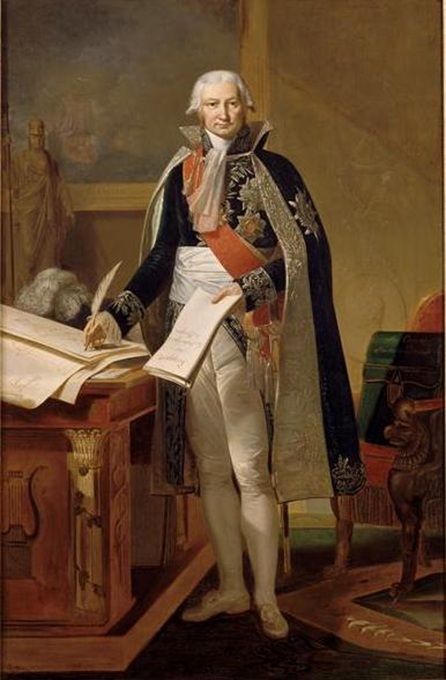
Jean-Baptiste de Champagny, conte di Nompère e duca di Cadore (Roanne, 4 agosto 1756 – Parigi, 3 luglio 1834), è stato un politico e militare francese. Membro degli Stati Generali per la nobiltà nel 1789, fu nominato ambasciatore a Vienna da Napoleone Bonaparte nel 1801 e mantenne la carica fino al 1804. Fu Ministro dell'interno dal 1804 al 1807 e Ministro degli affari esteri dal 1807 al 1811 e senatore dal 1813. Dopo il congresso di Vienna fu creato pari di Francia.
Terminato brillantemente il suo percorso di studi, venne ammesso all'École militaire di Parigi nel 1770, da dove decise poi di entrare nella marina militare francese.
Nel maggio del 1771, all'età di 15 anni, venne ammesso in marina col grado di guardiamarina e dal 1774 venne imbarcato a bordo della fregata La Flore con l'incarico di recare la notizia dell'ascesa di re Luigi XVI al trono francese al dey di Algeri ed al bey di Tunisi. Nel 1775, tornato in Francia, ottenne il grado di alfiere. Si imbarcò quindi sull'Écureuil.
Luigi XVI gli conferì la Gran Croce dell’Ordine di San Lazzaro di Gerusalemme e prese, poi, parte alla guerra d'indipendenza americana.
Nel 1782 venne nominato cavaliere dell'Ordine di San Luigi e proseguì la campagna militare. Venne nominato membro della Società dei Cincinnati.
Il 23 marzo 1789 venne eletto deputato nelle fila della nobiltà agli Stati generali del 1789 per il baliato di Forez (Montbrison). Il popolo di Roanne, tenendolo in altissima stima, lo nominò il 23 luglio 1789 quale comandante della guardia cittadina locale ed a lui si dovette il merito di aver fatto tutto il possibile per evitare la carestia in città, oltre ad aver fatto ricostruire il ponte che la collegava a Le Coteau, spazzato via nel corso della terribile alluvione del 1790.
Protestò contro l'abolizione dei titoli nobiliari nel corso della seduta del 4 agosto 1791 si distinse sempre ad ogni modo per la sua eloquenza e moderazione, motivo per cui venne nominato segretario dell'Assemblea nazionale costituente dal 16 febbraio 1790 nonché membro del comitato della marina e delle colonie.
Alla chiusura dei lavori dell'Assemblea Costituente (30 settembre 1791), si ritirò nelle terre di sua proprietà nel Forez ed in particolare nel suo castello di Anzy, vicino a Roanne. Qui venne arrestato su ordine di Jean-Marie Lapalus nel novembre del 1793 non solo come nobile ma anche come sospettato di cospirazione ai danni della repubblica durante il governo del Terrore e passò alcuni mesi in prigione nel convento delle Orsoline prima di essere trasferito al carcere dei Minimi. Dimenticato in cella, venne liberato il 3 settembre 1794 dopo la caduta di Robespierre. Si ritirò nuovamente in campagna a Saint-Vincent-de-Boisset, continuando a tenersi lontano dalla vita pubblica sino al colpo di stato di Napoleone il 18 brumaio.
Dopo il colpo di Stato che portò Napoleone Bonaparte al potere in Francia, fece parte del Direttorio per il dipartimento della Loira prima di essere chiamato a Parigi direttamente dal primo console che lo volle con sé nel nuovo consiglio di stato inaugurato nel 1799, delegandolo per la marina militare.
Probabilmente su proposte di Charles-François Lebrun, terzo console, venne nominato ambasciatore di Francia a Vienna il 20 giugno 1801 e venne nominato senatore.
Nominato cavaliere della Legion d'onore l'8 agosto 1804, assunse quindi la carica di ministro dell'interno in sostituzione di Jean-Antoine Chaptal mentre ancora si trovava all'estero (il ministero venne affidato ad interim a Jean Étienne Marie Portalis, già ministro del culto, fino al ritorno di Champagny da Vienna).
Nel 1804, sostenne la creazione dell'Academie Celtique, creata da Jacques Cambry, Jacques-Antoine Dulaure e Jacques Le Brigant (la futura Société des antiquaires de France) e nel 1805 ottenne la gran croce della Legion d'onore, accompagnando inoltre l'imperatore alla sua incoronazione come re d'Italia che si svolse il 26 maggio di quello stesso anno nel duomo di Milano.
Nel 1807, riaprì al culto il Pantheon di Parigi e ripristinò il capitolo della Basilica di Saint-Denis.
Il 24 aprile 1808 venne creato conte dell'impero francese e poi duca di Cadore il 15 agosto 1809.
Il 16 aprile 1811, pur col sostegno dello zar Alessandro I di Russia che tre anni prima lo aveva decorato con l'Ordine di Sant'Andrea, Champagny venne costretto a dimettersi dal suo incarico ministeriale per aver troppo sostenuto l'alleanza franco-russa, non prevedendo che le cose sarebbero cambiate repentinamente e che Napoleone si sarebbe rivolto contro lo stesso zar.
Il 14 aprile 1814, dopo la caduta di Napoleone, non esitò a schierarsi con i Borboni nella Restaurazione ed il 4 giugno successivo entrò a far parte della Camera dei Pari ed ottenne la nomina a contrammiraglio.
Quando il Bonaparte tornò al potere dopo l'esilio sull'isola d'Elba, rinnovò la propria devozione all'impero e venne nominato da napoleone pari di Francia.
La restaurazione di Luigi XVIII vide la fine della sua carriera politica con la sua radiazione dall'elenco dei pari con ordinanza del 24 luglio 1815. Venne reintegrato come barone con lettera patente del 25 aprile 1820 e, al senato, si schierò con la destra nazionale. Visse abbastanza a lungo da giurare fedeltà alla Monarchia di luglio nel 1830.
Morì il 3 luglio 1834 a Parigi e venne sepolto nel cimitero di Montparnasse.
FAMOUS LAZZARITES JEAN-BAPTISTE DE CHAMPAGNY, COUNT OF NOMPÈRE AND DUKE OF CADORE
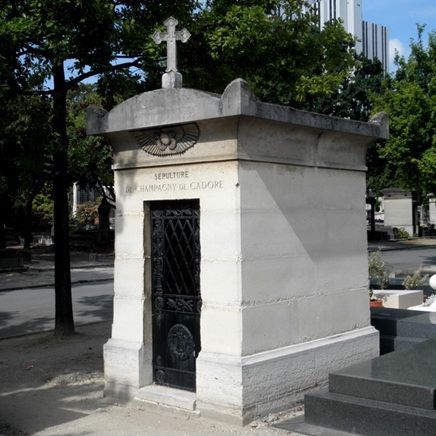
(The tomb of Jean-Baptiste Nompère de Champagny in the cemetery of Montparnasse)
Jean-Baptiste de Champagny, Count of Nompère and Duke of Cadore (Roanne, August 4, 1756 – Paris, July 3, 1834), was a French politician and military leader. A member of the Estates General for the nobility in 1789, he was appointed ambassador to Vienna by Napoleon Bonaparte in 1801, a position he held until 1804. He served as Minister of the Interior from 1804 to 1807, Minister of Foreign Affairs from 1807 to 1811, and as a senator from 1813. After the Congress of Vienna, he was created a Peer of France.
After completing his studies with distinction, he was admitted to the École Militaire in Paris in 1770, from where he later decided to join the French Navy.
In May 1771, at the age of 15, he was commissioned into the navy with the rank of midshipman and in 1774 he was sent aboard the frigate La Flore, tasked with delivering the news of King Louis XVI's accession to the Dey of Algiers and the Bey of Tunis. In 1775, upon his return to France, he achieved the rank of ensign. He then embarked on the Écureuil.
Louis XVI awarded him the Grand Cross of the Order of Saint Lazarus of Jerusalem, and he subsequently took part in the American War of Independence.
In 1782, he was made a Chevalier of the Order of Saint Louis and continued the military campaign. He was elected a member of the Society of the Cincinnati.
On March 23, 1789, he was elected a deputy among the nobility at the Estates-General of 1789 for the Bailiwick of Forez (Montbrison). The people of Roanne, holding him in the highest esteem, appointed him commander of the local city guard on July 23, 1789. He was credited with doing everything possible to prevent famine in the city, as well as having rebuilt the bridge connecting it to Le Coteau, which had been swept away in the terrible flood of 1790.
He protested against the abolition of noble titles during the session of August 4, 1791. However, he always distinguished himself for his eloquence and moderation, which is why he was appointed secretary of the National Constituent Assembly on February 16, 1790, as well as a member of the Navy and Colonies Committee.
At the close of the Constituent Assembly (September 30, 1791), he retired to his lands in Forez, specifically to his castle in Anzy, near Roanne. Here he was arrested on the orders of Jean-Marie Lapalus in November 1793, not only as a nobleman but also as a suspect in conspiracy against the republic during the Reign of Terror. He spent several months imprisoned in the Ursuline convent before being transferred to the Minims prison. Forgotten in his cell, he was released on September 3, 1794, after the fall of Robespierre. He retreated again to the countryside at Saint-Vincent-de-Boisset, continuing to stay away from public life until Napoleon's coup d'état on the 18th Brumaire.
After the coup d'état that brought Napoleon Bonaparte to power in France, he served on the Directory for the Loire department before being summoned to Paris directly by the First Consul, who appointed him to the new Council of State inaugurated in 1799, delegating him to the navy.
Probably at the suggestion of Charles-François Lebrun, Third Consul, he was appointed French ambassador to Vienna on June 20, 1801, and was appointed a senator.
Appointed a Chevalier of the Legion of Honor on August 8, 1804, he then assumed the post of Minister of the Interior, replacing Jean-Antoine Chaptal while he was still abroad (the ministry was entrusted ad interim to Jean-Étienne Marie Portalis, already Minister of Religion, until Champagny's return from Vienna).
In 1804, he supported the creation of the Academie Celtique, founded by Jacques Cambry, Jacques-Antoine Dulaure, and Jacques Le Brigant (the future Société des Antiquaires de France), and in 1805 he was awarded the Grand Cross of the Legion of Honor. He also accompanied the emperor to his coronation as King of Italy, which took place on May 26 of that year in Milan Cathedral.
In 1807, he reopened the Panthéon in Paris for worship and reinstated the chapterhouse of the Basilica of Saint-Denis.
On April 24, 1808, he was created Count of the French Empire and then Duke of Cadore on August 15, 1809.
On April 16, 1811, despite the support of Tsar Alexander I of Russia, who had decorated him with the Order of Saint Andrew three years earlier, Champagny was forced to resign from his ministerial post for having overly supported the Franco-Russian alliance, failing to foresee that things would suddenly change and that Napoleon would turn against the tsar himself.
On April 14, 1814, after Napoleon's fall, he did not hesitate to side with the Bourbons in the Restoration, and on June 4, he entered the Chamber of Peers and was appointed Rear Admiral.
When Bonaparte returned to power after exile on the island of Elba, he renewed his devotion to the empire and was named a peer of France by Napoleon.
The restoration of Louis XVIII marked the end of his political career with his expulsion from the list of peers by decree of July 24, 1815. He was reinstated as a baron by letters patent of April 25, 1820, and in the Senate, he sided with the national right. He lived long enough to swear allegiance to the July Monarchy in 1830.
He died on July 3, 1834, in Paris and was buried in the Montparnasse Cemetery.
Iscriviti alla nostra Newsletter
News Ordine di San Lazzaro di Gerusalemme – Gran Baliato di Sicilia