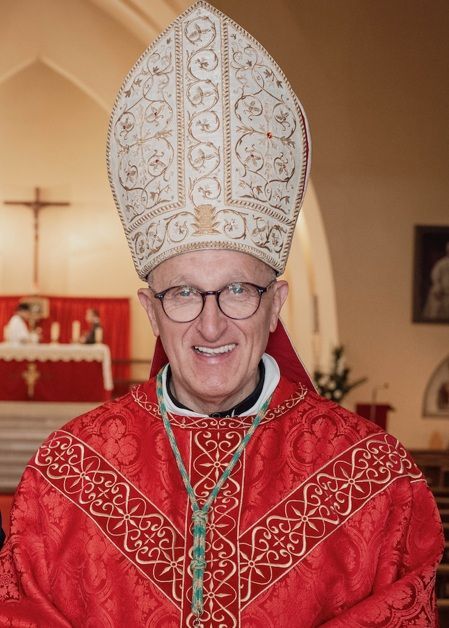
MEDITAZIONE PER IL GIOVEDI’ SANTO DI SUA ECCELLENZA IL MOLTO REVERENDO OTTAR MIKAEL MYRSETH, ECLJ, VESCOVO ORDINARIO DELLA CHIESA CATTOLICA NORDICA CAPPELLANO DEL GRAN BALIATO DI SICILIA
MEDITAZIONE PER IL GIOVEDI’ SANTO DI SUA ECCELLENZA IL MOLTO REVERENDO OTTAR MIKAEL MYRSETH, ECLJ, VESCOVO ORDINARIO DELLA CHIESA CATTOLICA NORDICA CAPPELLANO DEL GRAN BALIATO DI SICILIA
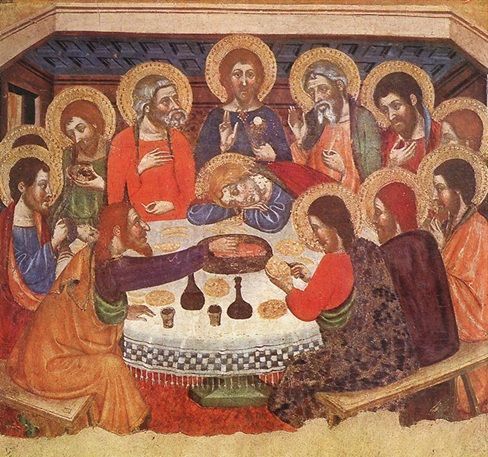
(Ultima Cena, di Jaume Serra, 1370-1400, Palazzo Abatellis, Palermo)
Meditazione su 1 Cor 11,23-26
Carissimi Confratelli e Consorelle dell’Ordine di San Lazzaro di Gerusalemme.
Il Giovedì Santo celebriamo la solenne istituzione dell’Eucaristia, della Santa Messa. La Messa e la celebrazione eucaristica sono il vero centro e pilastro della Chiesa, la Chiesa in forma condensata. Nella Messa la Chiesa si manifesta come assemblea locale e al tempo stesso universale attorno alla presenza viva del Signore risorto. Essa è il popolo di Dio e la famiglia di Dio, riunita con i suoi ministeri e le sue grazie, con i suoi pastori e i suoi maestri. Dove non c’è un popolo che si riunisce, pubblicamente e in modo ordinato, per celebrare la Parola di Dio e la liturgia eucaristica, specialmente nel giorno del Signore, la domenica – lì non c’è Chiesa, per quante devozioni, prediche o attività ci possano essere.
Questo è il motivo per cui i cristiani cattolici hanno l’«obbligo della Messa». Non è un dovere, in realtà, ma una chiamata, un richiamo a ciò che significa essere cristiani: appartenere al popolo di Dio che lo loda e lo adora. Martin Lutero ha detto: «Se vuoi prenderti la libertà di non andare all’altare, puoi altrettanto facilmente prenderti la libertà di non essere cristiano».
La Messa è la Chiesa, e la Chiesa è la Messa, semplicemente. Come era nella “sala superiore” a Gerusalemme, dove Gesù celebrò la sua prima comunione. Egli era lì, in mezzo ai suoi discepoli. La Chiesa come un feto, un embrione, pronta a nascere nel giorno di Pentecoste.
Celebrando la Messa, la Chiesa esercita la sua vocazione primaria, sì, esprime la sua essenza più profonda, come scrisse l’Apostolo alla Chiesa di Corinto: «Ogni volta che mangiate questo pane e bevete questo calice, voi annunciate la morte del Signore, finché egli venga».
Predicare è più che parlare. Celebrare significa lodare e benedire Dio per le sue grandi opere che creano e salvano. L’inno è predicazione e la predicazione è inno. La celebrazione dell’Eucaristia è proprio Eucaristia, ringraziamento, benedizione, lode – nelle letture, negli inni e nelle professioni di fede, ma soprattutto nella solenne preghiera eucaristica stessa, pronunciata in persona Christi, al posto di Cristo, dal vescovo o dal sacerdote che presiede e da tutti i concelebranti, insieme all’intero popolo di Dio. La grande preghiera eucaristica che abbiamo ereditato dalla liturgia ebraica. Questa preghiera inizia con le antiche parole: Sursum corda, «alzate i cuori», «rendiamo grazie al Signore nostro Dio», «è giusto e doveroso». E termina con la grande acclamazione: «A lui, con lui e in lui sia ogni gloria e onore, nei secoli dei secoli». E tutto il popolo risponde: «Amen!».
Il tema centrale di questo inno di lode è il sacrificio di Cristo per i nostri peccati e per i peccati del mondo intero. Egli stesso infatti disse: «Questo è il mio corpo, dato per voi / Questo calice è la nuova alleanza, sigillata nel mio sangue». Il suo corpo e il suo sangue sono veramente presenti, realmente presenti. Perché lo ha detto lui, perché la sua Parola creatrice risuona costantemente, per suo comando, sul pane e sul calice. Non è una speculazione ingegnosa che ci fa credere nella presenza reale, che riceviamo veramente il corpo e il sangue di Gesù. È il discorso diretto di Cristo, le sue stesse parole.
Come dice anche l’apostolo: «Il calice di benedizione che noi benediciamo, non è forse comunione al sangue di Cristo? E il pane che noi spezziamo, non è forse comunione al corpo di Cristo?» (1 Cor 10,16).
Proclamiamo la sua morte – non come un semplice fatto, come un annuncio, un necrologio, ma come una morte sacrificale e vittoriosa. Perché «con la sua morte ha vinto la morte», dicono i Padri.
La proclamiamo attraverso la celebrazione, la presentiamo, la eleviamo, manifestiamo l’opera salvifica di Gesù per noi e per tutti.
Lo proclamiamo attraverso la benedizione eucaristica, il ringraziamento e la lode sul pane e sul calice, attraverso la presenza del corpo e del sangue di Gesù.
Lo proclamiamo a Dio Padre: «Ecco colui che si è donato per noi, secondo la tua volontà, per amore: abbi pietà di noi, ascolta le nostre preghiere».
Lo proclamiamo agli angeli, con gioia e lode. Lo proclamiamo anche ai demoni: «Ecco, ecco colui che è più forte di tutte le potenze del male! Ecco il suo sangue che grida più forte del sangue di Abele, un grido che soffoca Satana, l’accusatore, e tutto e tutti coloro che vorrebbero accusarci!»
Lo proclamiamo a tutti gli uomini, al mondo intero: «Ecco colui che ama tutti, senza limiti, fino alla morte, che donandosi, come schiavo, sì, come sacrificio, ha preso posto alla destra di Dio e che ha ogni potere in cielo e in terra». E diciamo: «Ecco l’Agnello di Dio, ecco colui che toglie i peccati del mondo: Beati coloro che sono chiamati alla mensa dell’Agnello!»
Questo proclamiamo. Nella liturgia, in ogni nostro discorso e in tutta la nostra vita, nonostante tutte le contraddizioni e le opinioni, nonostante i nostri peccati e i nostri tradimenti. Proclamiamo la morte del Signore, finché egli stesso non venga!
Perciò, fratelli e sorelle, c’è fondamentalmente solo una cosa da dire, nel Giovedì Santo, ed è: «Signore, non sono degno che tu entri sotto il mio tetto, ma di’ soltanto una parola e la mia anima sarà guarita».
+ Ottar Mikael Myrseth, ECLJ
Vescovo Ordinario della Chiesa Cattolica Nordica
MEDITATION FOR HOLY THURSDAY BY HIS EXCELLENCY THE MOST REVEREND OTTAR MIKAEL MYRSETH, ECLJ, ORDINARY BISHOP OF THE NORTHERN CATHOLIC CHURCH CHAPLAIN OF THE GRAND BAILIWICK OF SICILY
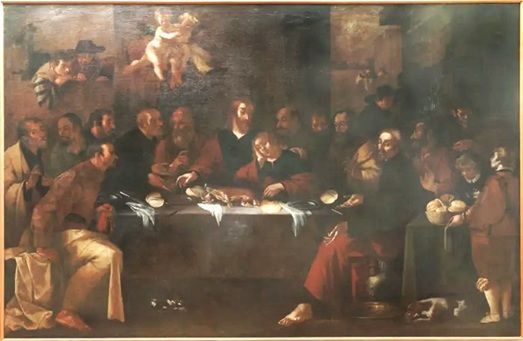
(Last Supper, Pietro D’Asaro known as the “One-Eyed Man of Racalmuto” 1621, Palazzo Abatellis, Palermo)
Meditation on 1 Cor 11,23-26
Dear Brothers and Sisters of the Order of Saint Lazarus of Jerusalem,
On Holy Thursday we celebrate the solemn institution of the Eucharist, of the Holy Mass. The Mass and the celebration of the Eucharist are the very center and pillar of the Church, the Church in condensed form. In the Mass the Church appears as the local and at the same time universal assembly around the living presence of the risen Lord. She is the people of God and the family of God, gathered together with her ministries and graces, with her shepherds and teachers. Where there is no people who gather, publicly and in an orderly manner, to celebrate the Word of God and the liturgy of the Eucharist, especially on the Lord's Day, Sunday – there is no Church, no matter how many devotions, sermons or activities there may be.
This is the background why Catholic Christians have the "obligation of Mass". It is not a duty, really, but a calling, a reminder of what it is to be a Christian: To belong to God's praising and worshiping people. Martin Luther has said: - If you want to take the liberty of not going to the altar, you can just as easily take the liberty of not being a Christian.
Mass is the church, and the church is Mass, simply. As it was in the "upper room" in Jerusalem, where Jesus held his first communion. He was there, in the midst of his disciples. The church as a fetus, an embryo, ready to be born on the day of Pentecost.
By celebrating Mass, the Church exercises her first calling, yes, she expresses her deepest essence, as the Apostle wrote to the Church in Corinth: As often as you eat this bread and drink this cup, you proclaim the Lord's death until he comes.
To preach is more than just speaking. To celebrate is to praise and bless God for his great works that create and save. The hymn is preaching and the preaching is hymn. The celebration of the Eucharist is precisely Eucharist, thanksgiving, blessing, praise - in readings, hymns and professions of faith, but above all in the solemn, Eucharistic prayer itself, pronounced in persona Christi, in the place of Christ, by the presiding bishop or priest and all the concelebrants, together with the entire people of God. The great Eucharistic prayer we have inherited from the Jewish liturgy. This prayer begins with the ancient words: Sursum corda, “lift up your hearts,” “let us give thanks to the Lord our God”, “it is right and just”. And it ends with the great acclamation: “To him and with him and in him be all glory and honor, forever and ever.” And all the people respond: “Amen!”
The keynote of this hymn of praise is Christ’s sacrifice for our sins and the sins of the whole world. For he himself said: “This is my body, which is for you / This cup is the new covenant, sealed in my blood.” His body and his blood are truly near, real present. Because he said it, because his creative Word constantly, at his command, resounds over the bread and the cup. It is not ingenious speculation that makes us believe in the real presence, that we really receive the body and blood of Jesus. It is the direct speech of Christ, his own words.
As the apostle also says: “Is not the cup of blessing which we bless a participation in the blood of Christ? And is not the bread that we break a participation in the body of Christ?” (1 Cor 10,16).
We proclaim his death – not as a mere fact, as an announcement, an obituary, but as a sacrificial and victorious death. For “by his death he conquered death”, say the Fathers.
We proclaim it through the celebration, we present it, we lift it up, we manifest the saving work of Jesus for us and for all.
We proclaim it through the Eucharistic blessing, the thanksgiving and praise over the bread and the cup, through the presence of the body and blood of Jesus.
We proclaim it to God the Father: “Behold, here is he who gave himself for us, according to your will, out of love: Have mercy on us, hear our prayers.”
We proclaim it to the angels, in joy and praise. We proclaim it also to the demons: “Behold, here is he who is stronger than all evil powers! Here is his blood that cries out louder than the blood of Abel, a cry that drowns out Satan, the accuser, and everything and everyone who would accuse us!”
We proclaim it to all people, to the whole world: “Here is he who loves everyone, without limit, even to death, who by surrendering himself, as a slave, yes, as a sacrifice, took his place at the right hand of God and who has all power in heaven and on earth.” And we say: “Behold the Lamb of God, behold him who takes away the sins of the world: Blessed are those who are called to the table of the Lamb!”
This we hold forth. In the liturgy, and in all our speech and in all our life, despite all contradictions and opinions, despite our sins and our betrayals.
The death of the Lord we proclaim, until he himself comes!
Therefore, brothers and sisters, there is basically only one thing to say, on Maundy Thursday, which is: “Lord, I am not worthy that you should enter under my roof, but say only a word and my soul will be healed.”
+ Ottar Mikael Myrseth, ECLJ
Ordinary Bishop of the Nordic Catholic Church
Iscriviti alla nostra Newsletter
News Ordine di San Lazzaro di Gerusalemme – Gran Baliato di Sicilia