MEDITAZIONE PER IL MERCOLEDÌ SANTO DEL REV.DO PROF. VITO IMPELLIZZERI, CHLJ, PRESIDE DELLA PONTIFICIA FACOLTA’ TEOLOGICA DI SICILIA “SAN GIOVANNI EVANGELISTA” CAPPELLANO DEL GRAN BALIATO DI SICILIA
MEDITAZIONE PER IL MERCOLEDÌ SANTO DEL REV.DO PROF. VITO IMPELLIZZERI, CHLJ, PRESIDE DELLA PONTIFICIA FACOLTA’ TEOLOGICA DI SICILIA “SAN GIOVANNI EVANGELISTA” CAPPELLANO DEL GRAN BALIATO DI SICILIA
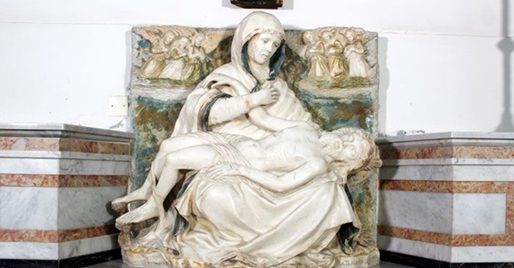
(La Pietà, Giorgio da Milano, Chiesa di Santa Maria di Gesù - La Gancia, Termini Imerese - PA, 1480)
Carissimi Confratelli e Consorelle dell’Ordine Militare ed Ospedaliero di San Lazzaro di Gerusalemme,
La fede di popolo, in sintonia con la narrazione evangelica, rivive la deposizione dalla croce del Crocifisso – non ancora – Risorto come la forma e la bellezza della pietà.
Basti pensare, ad esempio, alla Pietà del Bernini o quella di Michelangelo conservata nella Basilica di San Pietro. Quelle della madre sotto la croce sono braccia aperte che accolgono il corpo del Figlio ormai morto. Memoria e compimento, amore e dolore, carne filiale di croce, per quelle stesse braccia che hanno già accolto la carne del Figlio appena partorito, principio di vita. Carne da Parola, Luce da luce, Dio vero da Dio vero, ora anche uomo, Figlio di Dio ora anche figlio suo.
Il Figlio è la vita, ora le braccia della madre lo accolgono nel momento in cui la Vita scende tra i morti, perché tutti i morti, resi partecipi della sua carne di grembo e di croce, tornino a vivere per sempre; l’innocenza-perdono scende nella morte per sciogliere il suo legame originale con il peccato e legarla come nuova creazione alla sua croce e alla sua innocenza.
La pietà, luogo teologico della fede di popolo, coglie quel frammento di grazia dell’ora in cui la storia diventa grembo di salvezza, in cui la carne del Figlio diventa grembo di risurrezione, in cui il silenzio e la consegna del Figlio diventano grembo di liberazione dalla schiavitù del peccato e della morte. È l’inizio della Pasqua tra grembo e sepolcro.
Tutto per la carne del Figlio. La sua carne è la nostra salvezza. Il Verbo si è fatto carne, prima kenosi, e il grembo della Madre è stato il luogo teologico dove la vita, Egli è la vita, si è intessuta tra carne e dolore. Dolore di parto per la carna amata, quella del Figlio. La vita diventa carne, il suo nome è sempre Figlio. Ogni figlio, il Figlio di Dio e il figlio nostro. Il Figlio che è Dio non si è separato dalla carne nel momento della morte, non ha scelto di ritornare al Padre nella sola condizione divina, perché la sua carne, carne resa eterna dalla risurrezione, è il suo legame con noi, con tutti i figli nostri.
La sua carne è la nostra salvezza. La carne del Figlio tra grembo e sepolcro fa della Pasqua il compimento della nostra storia e della nostra condizione umana. Per questo, sulla croce, il Figlio nostra carne diventa grembo di Dio “donna ecco tuo figlio, figlio ecco tua madre”, diventa perdono di Dio “Padre perdona loro perché non sanno quello fanno”, diventa Paradiso “oggi sarai con me in Paradiso”.
Più chiaramente, il Figlio associando a sé quel malfattore buono, in cui tutta l’umanità è raccolta, nella sua carne crocifissa-non ancora-risorta trasfigura la Trinità in Paradiso. La Trinità è il nostro Paradiso, noi siamo quel “con me” del Figlio, tra grembo e sepolcro. Sappiamo, sappiamo che fosti «esaudito per la tua pietà»: Resurrezione, non altro è la risposta. Ma Tu non sapevi! Come noi non sappiamo. E compatta ancora sale sul mondo la Notte. (David Maria Turoldo).
Don Vito Impellizzeri, ChLJ
MEDITATION FOR HOLY WEDNESDAY BY THE REV. PROFESSOR VITO IMPELLIZZERI, CHLJ, PRESIDENT OF THE PONTIFICAL FACULTY OF THEOLOGY OF SICILY "ST. JOHN THE EVANGELIST" CHAPLAN OF THE GRAND BAILIWICK OF SICILY
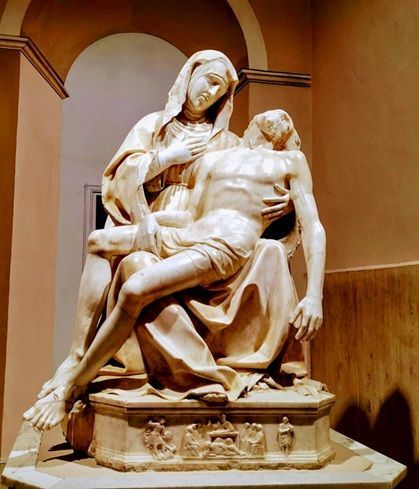
(Pietà, Antonello Gagini, Church of Our Lady of Sorrows, Soverato - CZ, 1521)
Dear Confreres and Sisters of the Military and Hospitaller Order of St Lazarus of Jerusalem,
The faith of the people, in harmony with the Gospel narrative, relives the deposition from the cross of the Crucified—not yet Risen—Christ as the form and beauty of piety.
Just think, for example, of Bernini's Pietà or Michelangelo's in St. Peter's Basilica. The mother's arms beneath the cross are open, embracing the body of her now dead Son. Memory and fulfillment, love and pain, filial flesh of the cross, for those same arms that have already embraced the flesh of the newly born Son, the source of life. Flesh from the Word, Light from light, true God from true God, now also man, Son of God, now also his son.
The Son is life, now the mother's arms embrace him at the moment Life descends among the dead, so that all the dead, made partakers of his flesh from the womb and the cross, may return to life forever; Innocence-forgiveness descends into death to dissolve its original bond with sin and bind it as a new creation to his cross and his innocence.
Pietà, the theological locus of the people's faith, captures that fragment of grace in the hour in which history becomes the womb of salvation, in which the Son's flesh becomes the womb of resurrection, in which the silence and surrender of the Son become the womb of liberation from the slavery of sin and death. It is the beginning of Easter between womb and tomb.
All for the flesh of the Son. His flesh is our salvation. The Word became flesh, the first kenosis, and the Mother's womb was the theological place where life—He is life—was woven between flesh and pain. Birth pain for the beloved flesh, that of the Son. Life becomes flesh; his name is always the Son. Every son, the Son of God and our son. The Son, who is God, did not separate himself from the flesh at the moment of death; he did not choose to return to the Father in the divine condition alone, because his flesh, flesh made eternal by the resurrection, is his bond with us, with all our children.
His flesh is our salvation. The Son's flesh between womb and tomb makes Easter the fulfillment of our history and our human condition. Therefore, on the cross, the Son, our flesh, becomes the womb of God: "Woman, behold your son; son, behold your mother." He becomes God's forgiveness: "Father, forgive them, for they know not what they do." He becomes Paradise: "Today you will be with me in Paradise."
More clearly, the Son, associating with himself that good criminal, in whom all humanity is gathered, in his crucified-not-yet-resurrected flesh, transfigures the Trinity in Paradise. The Trinity is our Paradise; we are that "with me" of the Son, between womb and tomb. We know, we know that you were "heard for your mercy": Resurrection, nothing else is the answer. But You did not know! Just as we do not know. And the Night still rises solidly over the world. (David Maria Turoldo)
Rev. Vito Impellizzeri, ChLJ
Iscriviti alla nostra Newsletter
News Ordine di San Lazzaro di Gerusalemme – Gran Baliato di Sicilia