MESSAGGIO AI MEMBRI DELL’ORDINE DI SUA ECCELLENZA IL GRAN PRIORE ECCLESIASTICO IN OCCASIONE DELLA FESTA DI SAN LAZZARO
MESSAGGIO AI MEMBRI DELL’ORDINE DI SUA ECCELLENZA IL GRAN PRIORE ECCLESIASTICO IN OCCASIONE DELLA FESTA DI SAN LAZZARO
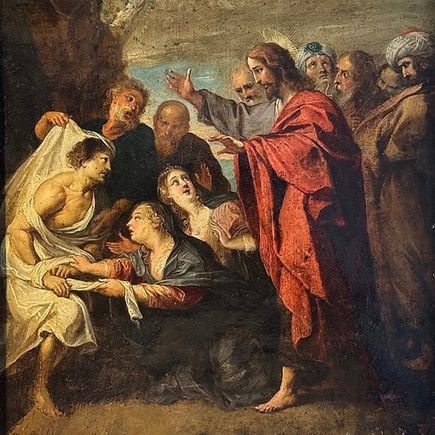
(La Resurrezione di Lazzaro, un olio su rame del XVII secolo, di scuola fiamminga, Chiesa Capitolare dell’Ordine di San Lazzaro in Monreale)
Cari confratelli e consorelle,
Il 29 luglio la Chiesa celebra la festa di San Lazzaro e, naturalmente, con lui, le sue sorelle Marta e Maria. Il testo che accompagna la resurrezione del nostro patrono, che ci viene offerto da San Giovanni nel suo Vangelo, è ricco di spunti! Sappiamo già dal Vangelo di Luca che questa era una famiglia che accolse Gesù nella propria casa. Tale è la familiarità che le sorelle possono semplicemente mandare a Gesù il messaggio: "Signore, colui che tu ami è malato".
Sappiamo, naturalmente, che l'amore del Signore è eterno e per tutti. È per amore del mondo che Egli è venuto. Per il mondo sì, ma non si tratta semplicemente di un amore generico per quella folla infinita, bensì di un amore veramente personale: Egli conosce ognuno di noi meglio di quanto ci conosciamo noi stessi. E poiché è personale, il suo amore costante per ciascuno di noi è reattivo, persino diverso a seconda dei nostri bisogni e delle nostre circostanze, a volte dolce, a volte forse un "amore severo". Lo vediamo certamente nel modo in cui tratta i primi che chiama a sé!
Conoscere Dio attraverso l'amore…
Come Lazzaro, il cui nome è così legato al nostro, dobbiamo avere il coraggio di aprire i nostri cuori a quell'amore divino e lasciarci plasmare da esso. La domanda più insistente che il Signore ci rivolge nel Vangelo è: "Mi ami?", e desidera ardentemente che noi rispondiamo: "Sì, Signore, tu sai che ti amo!". La verità è che il Dio che è amore può essere veramente conosciuto solo attraverso l'amore. Agostino d'Ippona, la cui Regola ha contribuito a formare il nostro Ordine, pur essendo una delle menti più brillanti del suo tempo, e del nostro, fece la grande scoperta che tutti noi dobbiamo fare: "Ci avviciniamo a Dio attraverso l'amore, non attraverso la navigazione".
Mentre rifletto sull'accoglienza che Lazzaro riservò a Gesù nella sua casa, mi viene anche ricordato che devo permettere al Signore di essere il Signore di tutta la mia vita, di essere non solo ospite, ma padrone della mia casa e della mia quotidianità. Una volta ospitai a Melbourne un giovane colombiano molto devoto. Oltre alle varie croci e icone già presenti nella canonica, aveva l'abitudine di erigere piccoli "santuari" temporanei dedicati ai suoi santi prediletti nei giorni delle loro feste. Certo, non sono principalmente i segni materiali presenti in casa a garantire quella continuità di vita, ma essi simboleggiavano e incoraggiavano la nostra speranza di lasciare che la fede cristiana influenzasse ogni cosa, e il nostro desiderio più profondo di santità!
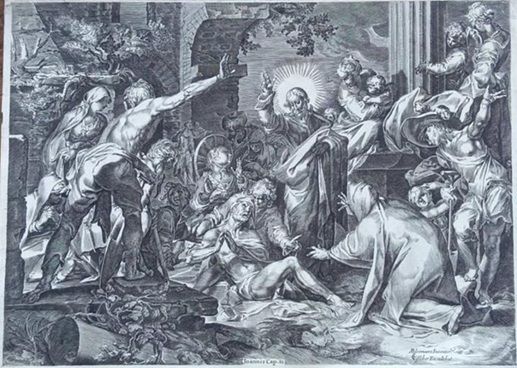
(La Resurrezione di Lazzaro, acquaforte e bulino del XVII secolo, di Abraham Bloemaert, realizzata dall’incisore Claez Janszoon Visscher, Chiesa Capitolare dell’Ordine di San Lazzaro a Monreale)
Dio ha aiutato…
La resurrezione del nostro patrono è un segno del potere di Gesù sulla vita e sulla morte. È come se il ritardo con cui il Signore arrivò a Betania, fino a quando il corpo di Lazzaro non iniziò a puzzare, servisse a sottolineare questo potere. San Beda, riflettendo sul fatto che il nome "Lazzaro" è la traduzione greca dell'ebraico אֶלְעָזָר (Eleazar) che significa "Dio ha aiutato", dice: "Di tutti i morti che il Signore ha risuscitato, egli fu il più aiutato, poiché era morto da quattro giorni, quando il Signore lo risuscitò". Sebbene ciò sia vero, come gli altri che Gesù risuscitò dai morti, come narrato nei Vangeli, Lazzaro era destinato a morire di nuovo. La risurrezione temporanea, per quanto bella, preannunciava una risurrezione più grande, una vita eterna, un aiuto migliore. Gesù dice a sua sorella Marta: «Io sono la risurrezione e la vita; chi crede in me, anche se muore, vivrà; chiunque vive e crede in me non morirà mai». Poi le chiede, e certamente la domanda è rivolta anche a noi: «Credi tu questo?». Egli desidera ardentemente sentirci rispondere: «Sì, Signore, io credo». I membri dell'Ordine di San Lazzaro devono certamente incoraggiarsi a vicenda in questa fede e, come uno dei motivi della nostra esistenza, difenderla e proclamarla.
Infine, il nome Lazzaro ci offre un indizio sulla nostra vocazione come membri dell'Ordine: «Dio ha aiutato». Nel nome di Dio, cioè nella sua forza e con l'amore di colui che pianse per l'angoscia che circondò la morte di Lazzaro, noi esistiamo per aiutare! Noi Lazzariti aiutiamo gli altri. È nel nostro DNA!
Mentre meditavo sulle parole del Signore che concludono questa storia, "Scioglietelo e lasciatelo andare", mi sono ritrovato a pensare alle dita tremanti e sconosciute che iniziarono a srotolare delicatamente quelle bende di lino e il panno per il viso, alla meraviglia e sicuramente alla gioia di tutto ciò. In piccola parte, quando, come Ordine, aiutiamo coloro che sono prostrati o abbattuti, condividiamo quella chiamata a sciogliere i legami e a liberare. È una vocazione davvero grande. Possa portarci gioia!
Buona festa di San Lazzaro!
+ Lindsay Urwin OGS, GCLJ
Gran Priore Ecclesiastico
MESSAGE TO MEMBERS OF THE ORDER OF HIS EXCELLENCE THE ECCLESIASTICAL GRAND PRIOR ON THE OCCASION OF THE FESTIVAL OF SAN LAZZARO
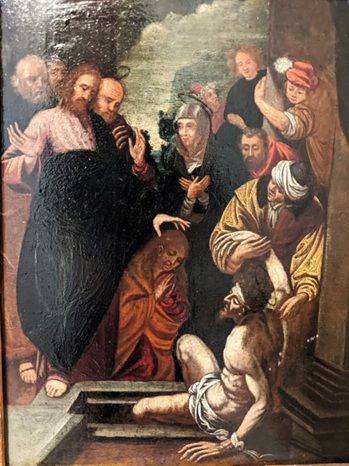
(The Raising of Lazarus, Pieter van Mol, oil on panel, 17th century, Capitular Church of the Order of Saint Lazarus in Monreale)
Dear Brothers and Sisters,
On July 29th the Church celebrates the Feast of St Lazarus, and of course with him, his sisters Martha and Mary. The text surrounding the raising of our patron which St John gives us in his Gospel is full or riches! We already know from the Gospel of Luke that this was a family that welcomed Jesus into their home. Such is the familiarity that the sisters can simply send the message to Jesus, “Lord, he whom you love is ill.”
We know of course that the love of the Lord is both everlasting and for all. It is for love of the world that he came. For the world yes, but it is not simply a general love for that countless crowd but a truly personal love – he knows each of us better than we know ourselves. And because it is personal, his consistent love for each of us is responsive, even different according to our needs and circumstances, sometimes gentle, sometimes perhaps, a ‘tough love’. We certainly see this in his treatment of the first ones he called to be with him!
Knowing God by love…
Like Lazarus, whose name is so linked with ours, we must have the courage to open our hearts to that divine love and allow ourselves to be formed by it. Our Lord’s most insistent question recorded in the Gospel is “Do you love me?” and he longs for us to say, “Yes, Lord, you know I love you!” The truth is, the God who is love, can only truly be known by love. Augustine of Hippo, whose Rule helped form our Order, though one of the greatest minds of his day, and ours, made the great discovery we all need to make: “We come to God by love, not by navigation.”
As I reflect on the welcome Lazarus gave Jesus to his home, I am also reminded that I must allow the Lord to be the Lord of all my life, to be not only guest but the master of my home and daily living. I once had a very devout young Columbian living with me in Melbourne. In addition to the various crosses and icons already around the parish house, he had the habit of setting up little temporary ‘shrines’ to various favourite saints on their feast days. Of course, it’s not primarily physical signs about the house that ensure that continuity of living, but they certainly symbolised and encouraged our best hopes to allow the Christian faith to influence everything, and our best desire to be holy!
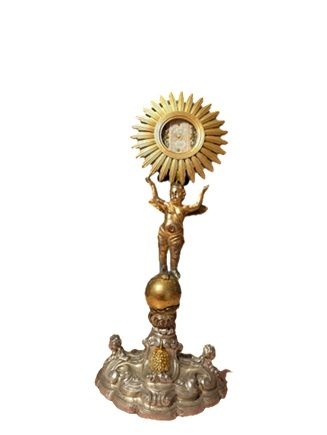
(Reliquary from the first half of the 18th century containing the relic of Saint Lazarus – Chapter Church of the Order of Saint Lazarus in Monreale)
God has helped…
The raising of our patron is a sign that Jesus has power over life and death. It’s as if the Lord’s delay in getting to Bethany until Lazarus’s body stank is to emphasise that power. The English St Bede, reflecting that the name "Lazarus" is the Greek rendering of the Hebrew אֶלְעָזָר (Eleazar) which means "God has helped", says, "Of all the dead which our Lord raised, he was most helped, for he had lain dead four days, when our Lord raised him to life”. Though that be so, like the others Jesus raised from the dead recorded in the Gospels, Lazarus was to die again. The temporary raising, beautiful as it surely was, pointed toward a greater resurrection, an eternal life, a better ‘help’. Jesus tells his sister Martha, “I am the resurrection and the life. Whoever believes in me, though he die, yet shall he live, and everyone who lives and believes in me shall never die”. Then he asks her, and surely the question is also for us, “Do you believe this?” He surely longs to hear us say “Yes, Lord I believe”. Members of the Order of St Lazarus must surely encourage one another in that believing, and as one of the reasons for our Order’s existence, defend and proclaim that belief.
Just finally, the name Lazarus gives a clue to our vocation as members of the Order. “God has helped”. In the name of God, that is, in his strength and with the love of the one who wept over the anguish that surrounded the death of Lazarus, we exist to help! We Lazarites help others. It’s in our DNA!
As I meditated on the words of the Lord that end this story, “Unbind him, and let him go” I found myself wondering about the unknown trembling fingers that began to gently unroll those linen strips and face cloth, the wonder and surely the joy of it all. In a small way, when, as an Order, we help those who are laid low or bowed down we share in that call to unbind and set free. It’s
quite a vocation. May it bring us joy!
Happy Feast of St Lazarus!
+ Lindsay Urwin OGS, GCLJ
Ecclesiastical Grand Prior
Iscriviti alla nostra Newsletter
News Ordine di San Lazzaro di Gerusalemme – Gran Baliato di Sicilia