MEDITAZIONE PER LA DOMENICA DI PASQUA ORTODOSSA DEL MOLTO REV.DO PAOLO PATRICOLO, CHLJ ARCHIMANDRITA DEL PATRIARCATO ECUMENICO DI COSTANTINIOPOLI CAPPELLANO DEL GRAN BALIATO DI SICILIA
MEDITAZIONE PER LA DOMENICA DI PASQUA ORTODOSSA DEL MOLTO REV.DO PAOLO PATRICOLO, CHLJ ARCHIMANDRITA DEL PATRIARCATO ECUMENICO DI COSTANTINIOPOLI CAPPELLANO DEL GRAN BALIATO DI SICILIA
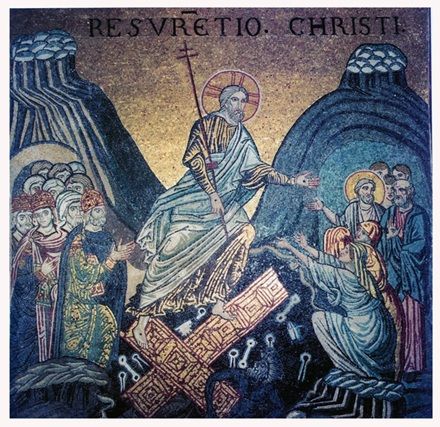
(Resurrezione di Cristo, Mosaico bizantino, Duomo di Monreale, sec. XII)
Carissimi Confratelli e Consorelle dell’Ordine Militare ed Ospedaliero di San Lazzaro di Gerusalemme,
Quest’anno la Pasqua ortodossa cade una settimana dopo la Pasqua latina.
La Pasqua, cuore pulsante della fede ortodossa, non è semplicemente una festa tra le altre, ma la festa delle feste, il centro luminoso attorno al quale ruota tutta la vita della Chiesa. Essa non è solo memoria di un evento passato, ma esperienza viva e presente della Risurrezione di Cristo, che trasfigura il tempo, la storia e l’uomo stesso.
Nel cammino della Grande Quaresima, il fedele è chiamato a scendere nel proprio cuore, a confrontarsi con il peccato, la fragilità, la morte che abita interiormente. Questo itinerario ascetico non è fine a sé stesso: esso prepara all’incontro con la luce. La notte pasquale, infatti, irrompe come una rottura radicale: dopo il silenzio del sepolcro, dopo l’oscurità del Venerdì Santo, la Chiesa proclama con forza: “Cristo è risorto dai morti, con la morte ha calpestato la morte”.
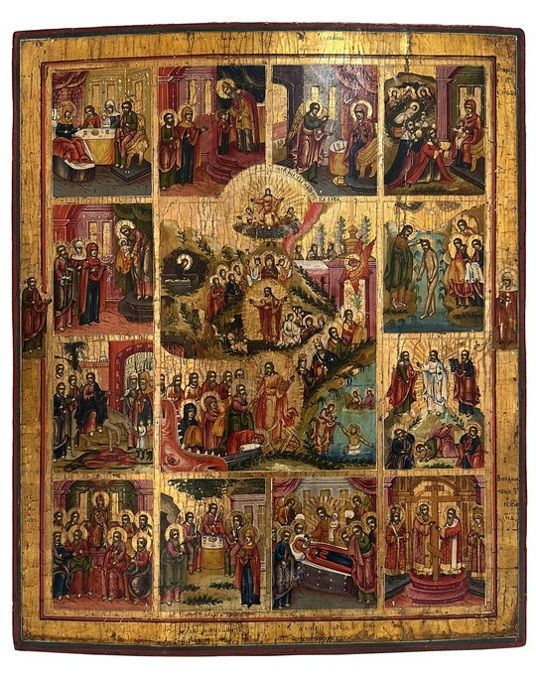
Dal punto di vista ortodosso, la Risurrezione non è soltanto la vittoria personale di Cristo, ma la vittoria cosmica sulla morte. Non si tratta solo di un ritorno alla vita biologica, ma dell’inizio di una nuova creazione. In Cristo risorto, l’umanità è restaurata, la morte è svuotata del suo potere, e l’inferno stesso è vinto. Le icone della Risurrezione, che raffigurano Cristo mentre solleva Adamo ed Eva dagli inferi, esprimono profondamente questa verità: nessuno è escluso dalla possibilità della salvezza.
La Pasqua ortodossa è anche una liturgia della luce. La fiamma che si trasmette di fedele in fedele nella notte pasquale simboleggia la luce increata della Risurrezione che illumina ogni uomo. È una luce che non acceca, ma guarisce; non divide, ma unisce; non si consuma, ma si moltiplica. In quel momento, la comunità dei credenti diventa icona del Regno: una comunione nella gioia, nella pace e nella vita eterna.
Un altro elemento centrale è la dimensione della gioia. Non una gioia superficiale o emotiva, ma una gioia profonda, che nasce dalla certezza che la morte non è più l’ultima parola. Per questo la Chiesa invita continuamente: “Entrate tutti nella gioia del vostro Signore”. Anche chi arriva all’ultimo momento, anche chi ha faticato poco o molto, è chiamato a partecipare alla festa: la misericordia divina supera ogni misura umana.1
Infine, la Pasqua è un invito alla trasformazione personale. Non basta celebrare esteriormente: il cristiano è chiamato a diventare egli stesso testimone della Risurrezione, portando nella propria vita la luce, il perdono e la speranza. Vivere pasqualmente significa amare i nemici, vincere il male con il bene, e camminare nella certezza che, anche nelle tenebre più profonde, la luce di Cristo non viene mai meno.
Così, nella prospettiva ortodossa, la Pasqua non è solo un giorno, ma uno stato dell’essere: è la vita nuova in Cristo, che già ora irrompe nel mondo e conduce ogni cosa verso il suo compimento nella gloria del Regno.
Cristo è risorto! Veramente è risorto!
Archimandrita Paolo (Patricolo), ChLJ
MEDITATION FOR ORTHODOX EASTER SUNDAY BY THE VERY REV. PAOLO PATRICOLO, CHLJ ARCHIMANDRITE OF THE ECUMENICAL PATRIARCHATE OF CONSTANTINIOPOLIS CHAPLAIN OF THE GRAND BAILIWICK OF SICILY
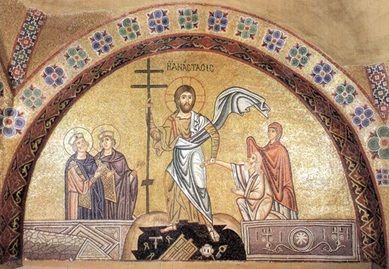
(Christ descended into Limbo, saving Adam, Eve, King David, and King Solomon, Mosaic, XI sec. Monastery Church, Hosios Loukas, Greece)
Dear Confreres and Sisters of the Military and Hospitaller Order of St Lazarus of Jerusalem,
This year, Orthodox Easter falls a week after Latin Easter.
Easter, the beating heart of the Orthodox faith, is not simply one feast among others, but the feast of feasts, the luminous center around which the entire life of the Church revolves. It is not merely the memory of a past event, but a living and present experience of Christ's Resurrection, which transfigures time, history, and humanity itself.
On the journey of Great Lent, the faithful are called to descend into their own hearts, to confront sin, fragility, and the death that dwells within. This ascetic journey is not an end in itself: it prepares for the encounter with the light. Easter night, in fact, erupts like a radical rupture: after the silence of the tomb, after the darkness of Good Friday, the Church forcefully proclaims: "Christ is risen from the dead; by death he has trampled down death."
From the Orthodox perspective, the Resurrection is not only Christ's personal victory, but the cosmic victory over death. It is not merely a return to biological life, but the beginning of a new creation. In the risen Christ, humanity is restored, death is emptied of its power, and hell itself is conquered. Icons of the Resurrection, which depict Christ raising Adam and Eve from the underworld, profoundly express this truth: no one is excluded from the possibility of salvation.
Orthodox Easter is also a liturgy of light. The flame that passes from believer to believer on Easter night symbolizes the uncreated light of the Resurrection that illuminates every man. It is a light that does not blind, but heals; it does not divide, but unites; it is not consumed, but multiplies. At that moment, the community of believers becomes an icon of the Kingdom: a communion in joy, peace, and eternal life.
Another central element is the dimension of joy. Not a superficial or emotional joy, but a profound joy, born of the certainty that death is no longer the last word. This is why the Church continually invites: "Enter, all of you, into the joy of your Lord." Even those who arrive at the last moment, even those who have struggled little or much, are called to participate in the celebration: divine mercy surpasses all human measure.1
Finally, Easter is an invitation to personal transformation. It is not enough to celebrate externally: Christians are called to become witnesses of the Resurrection themselves, bringing light, forgiveness, and hope into their lives. Living Easter means loving our enemies, conquering evil with good, and walking in the certainty that, even in the deepest darkness, the light of Christ never fails.
Thus, from the Orthodox perspective, Easter is not just a day, but a state of being: it is the new life in Christ, which already bursts into the world and leads all things toward its fulfillment in the glory of the Kingdom.
Christ is risen! He is truly risen!
Archimandrite Paul (Patricolo), ChLJ
Iscriviti alla nostra Newsletter
News Ordine di San Lazzaro di Gerusalemme – Gran Baliato di Sicilia